ISA Certified Arborist · Austin, TX
Oak Wilt Diagnosis & Consultation in Austin, Texas
Oak wilt is one of the most destructive tree diseases in Texas — and one of the most frequently misunderstood. An early assessment by an ISA Oak Wilt Qualified Arborist can help identify management options before additional trees are affected.
ISA Certified Arborist
ASCA Registered Consulting Arborist
Oak Wilt Qualified Arborist
Serving Austin & the Texas Hill Country
⚠ Avoid pruning oak trees between February and June. Fresh wounds created during peak beetle activity may increase the risk of oak wilt transmission.
Oak Wilt Continues to be a Significant Problem
Oak wilt, caused by the fungus Bretziella fagacearum, is endemic to Central Texas and spreads through two primary pathways: overland transmission by insect vectors and underground transmission through interconnected root systems.
In many situations, an infected tree can spread the disease to neighboring oaks through root connections, and the affected area may expand well beyond the original tree. By the time symptoms become obvious to a property owner, underground transmission may already have occurred.
Austin Beautiful Trees provides professional and objective oak wilt consultations performed by an ISA Certified Arborist and ASCA Registered Consulting Arborist. Our assessments focus on observable conditions, site context, potential transmission pathways, and practical management considerations tailored to your property.
When Homeowners Contact Us About Oak Wilt
Visible symptoms have appeared: Leaves are discoloring, wilting, or dropping in a pattern that appears unusual. A timely professional assessment can help determine whether the observed symptoms are consistent with oak wilt or another condition.
A neighboring tree was diagnosed with oak wilt: Because oak wilt can spread through interconnected root systems, a confirmed diagnosis nearby may be relevant to your trees even if they currently appear healthy.
Before purchasing a property: Oak wilt is one of the conditions we evaluate during real estate tree inspections. Understanding whether a property may have active or historical oak wilt activity can be important information before closing.
Recognizing Oak Wilt Symptoms in Central Texas
Oak wilt symptoms vary by species, season, environmental conditions, and stage of infection. Several other conditions can produce similar symptoms, including drought stress, root injury, hypoxylon canker, and other diseases. For this reason, symptom recognition alone should not be considered diagnostic.
Live Oaks (Quercus fusiformis)
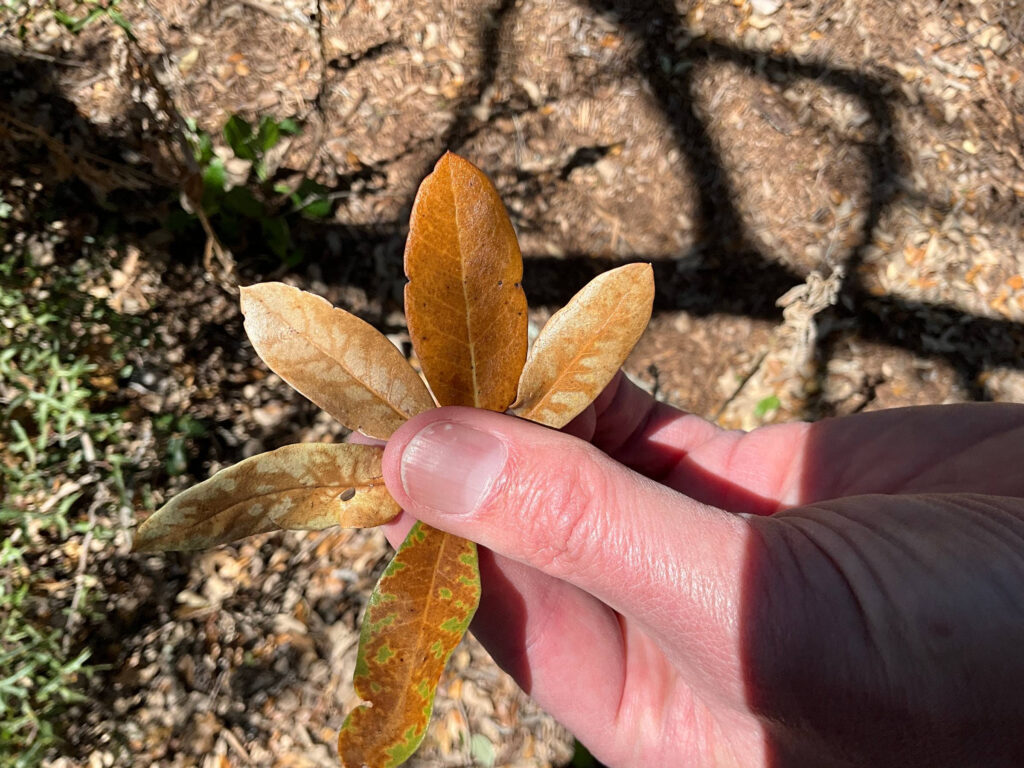
- Veinal necrosis — brown or yellow discoloration associated with leaf veins
- Bronzing — tan-to-brown discoloration beginning at leaf margins and progressing inward
- Premature leaf drop, often with portions of the leaf remaining green
- Decline that may spread among neighboring live oaks through root-grafted systems
- Fungal mats generally do not form on live oaks in Central Texas
Red Oaks / Spanish Oaks (Quercus buckleyi)
- Rapid wilting and browning that may progress canopy-wide within weeks
- Leaves may become dull green before turning brown
- Fungal mats may develop beneath the bark and can serve as a source of inoculum
- Dead trees often remain standing with leaves attached, which can be a useful field clue but is not diagnostic by itself
- Mortality frequently occurs within weeks of symptom development
⚠ Important: Avoid Pruning Oaks February Through June Unless People or Property are at Risk
Fresh pruning wounds can attract sap-feeding nitidulid beetles capable of carrying oak wilt fungal spores. The Texas A&M Forest Service recommends avoiding oak pruning during periods of highest beetle activity, generally February through June.
If pruning, storm damage, or construction-related wounding occurs during this period, exposed wood should be painted immediately with a latex-based pruning sealant. Contact us if you have questions regarding pruning timing or wound management.
How Oak Wilt Spreads — And Why Early Action Matters
Understanding the two primary transmission pathways helps explain why timing is important when managing oak wilt.
Overland Transmission Through Beetles
Nitidulid beetles are attracted to fresh wounds on oak trees. If a beetle has previously visited a fungal mat on an infected red oak, fungal spores may be transferred to exposed wood on a healthy tree.
This transmission pathway is most active during spring and early summer and is one of the primary reasons pruning timing and wound management are emphasized in Central Texas.
Underground Root-to-Root Transmission
Oaks growing in close proximity may develop interconnected root systems. The oak wilt fungus can move through these root grafts and infect neighboring trees even when no visible above-ground connection exists.
This transmission pathway is responsible for many expanding oak wilt centers observed throughout Central Texas. Root barrier trenching, when properly designed and installed before extensive spread has occurred, may help interrupt this pathway and protect surrounding trees.
Laboratory Confirmation
A field assessment can identify symptoms and site conditions that are consistent with oak wilt, but laboratory testing may be recommended in some situations to confirm the presence of the pathogen.
Whether testing is warranted depends on the species involved, symptom development, management decisions being considered, and the availability of suitable samples.

What an oak wilt consultation with Austin Beautiful Trees includes
Our oak wilt consultations are performed by an ISA Oak Wilt Qualified Arborist and ASCA Registered Consulting Arborist. We provide a professional evaluation of observable conditions and a verbal summary of findings, interpretation, and recommendations.
We do not perform tree removal or root trenching ourselves, but we can work with your tree service to help ensure management actions are properly planned and timed.
- On-site assessment of symptomatic and adjacent trees
- Species identification and symptom evaluation
- Assessment of potential root connectivity
- Identification of conditions consistent with or distinct from oak wilt
- Evaluation of transmission risk to nearby trees
- Guidance regarding pruning timing and wound management
- Coordination guidance regarding root barrier trenching when appropriate
- Discussion of likely management considerations and next steps
Why Timing Matters
There is currently no reliably curative but there is a therapeutic treatment for a tree actively infected with oak wilt. Management efforts are generally directed toward limiting transmission and protecting surrounding trees.
Early Assessment — More Options Available
When oak wilt is identified while only a small number of trees are affected, root barrier trenching (for certain sized properties) and other management strategies may be considered before the disease progresses further through connected root systems.
Delayed Response — Fewer Options Remain
As oak wilt spreads through interconnected roots and affects more trees, management becomes more challenging and costly. Trees that appear healthy may already be infected but not yet exhibiting visible symptoms.
For this reason, timely evaluation is often one of the most important factors affecting available management options.
Professional Assessment Disclaimer
Oak wilt consultations are based on observable conditions present at the time of inspection. Similar symptoms may result from drought stress, root injury, fungal diseases, insect activity, herbicide injury, and other factors.
Opinions and recommendations may be revised if additional information becomes available, including laboratory results, excavation findings, or changes in tree condition over time.
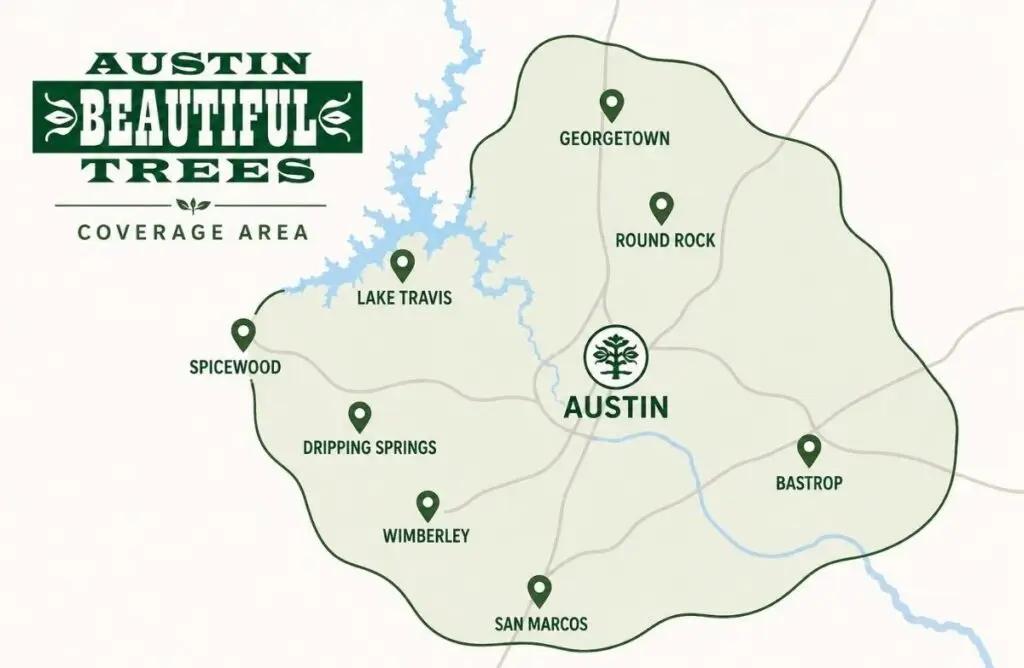
Service area
We provide real estate tree inspections throughout Austin and the surrounding Central Texas region. If you don’t see your city listed, call us — we may still be able to help.
- Austin
- Dripping Springs
- Wimberley
- Bastrop
- San Marcos
- Round Rock
- Georgetown
- Lake Travis
- Spicewood