ISA Certified Arborist · Austin, TX
Real Estate Tree Inspection Austin, Texas
Understand the condition, health, and risk factors associated with significant trees on a property before you close.
A home inspection may not tell the whole story about a property's trees.
Most home inspectors are not trained arborists. While home inspectors may identify obvious tree concerns, many tree-related issues require specialized evaluation by a qualified arborist.
Conditions such as oak wilt and other tree diseases, root collar disorders, structural defects, construction impacts, or root-related infrastructure conflicts may not be readily apparent during a standard home inspection.
In Central Texas, mature trees are often among a property’s most valuable landscape assets. They can also represent significant maintenance obligations and potential risk management considerations. Understanding the condition of a property’s trees before closing can help buyers make informed decisions and avoid unexpected expenses after purchase.
Austin Beautiful Trees provides independent tree assessments performed by an ISA Certified Arborist and ASCA Registered Consulting Arborist.
Our written reports are designed to help buyers, sellers, and real estate professionals better understand the condition of a property’s trees and identify issues that may warrant further attention.
When buyers, sellers, and agents call us
During the option period — The most common scenario. Buyers often request a tree assessment during the option period to better understand tree health, structural condition, maintenance needs, and potential risk factors before completing the purchase.
Before listing a property — Sellers may wish to document tree condition, address maintenance concerns proactively, or identify issues before they become obstacles during a transaction.
After purchasing or inheriting a property — New owners frequently seek a baseline assessment of their trees to help prioritize maintenance, preserve valuable landscape assets, and plan for future management.
What's included in your inspection report
Every real estate tree inspection by Austin Beautiful Trees includes a limited visual assessment of significant trees on the property and a written report summarizing observations, findings, and professional recommendations.
Reports may be shared with real estate professionals, property owners, attorneys, or other advisors involved in the transaction.
- Overall tree health and vigor assessment
- Screening for observable signs and symptoms consistent with oak wilt and other common tree diseases
- Identification of observable tree conditions that may require monitoring, maintenance, or additional arboricultural evaluation
- Observable evidence of tree-related conflicts with foundations, pavement, plumbing, or other hardscape or infrastructure
- Species identification for assessed trees
- Assessment for obvious structural defects
- Evaluation for observable signs of insect and pest activity
- Proximity considerations involving structures, fences, and utilities
- Recommended next steps and anticipated maintenance priorities
- General considerations regarding protected and heritage trees under applicable local ordinances
Tree Problems Buyers Don't Know to Look For
Central Texas has a specific set of tree risks that most buyers — and most home inspectors — aren’t familiar with. Here’s what we look for that others miss:
Oak Wilt
The most destructive tree disease in Texas. Spreads underground between connected root systems. Early detection can save adjacent trees — but only if caught before closing.
Protected Trees
Austin has strict tree ordinances. Unpermitted removal or damage to protected heritage trees carries steep fines. We can help identify protected trees and discuss development feasibility.
Wildfire Risk
Properties in the Hill Country and Lake Travis area face real wildfire exposure. Overgrown canopies and ladder fuels near structures are a liability many buyers overlook.
Utility & Structure Conflicts
Trees growing into power lines, overhanging rooflines, or leaning toward structures can represent both safety hazards and immediate removal costs.
How the Inspection Works
We keep the process simple and fast — designed to fit inside a standard Texas option period.
Step 01
Schedule
Call or email us with the property address. We’ll confirm availability and schedule around your option period timeline.
Step 02
On-Site Assessment
We visit the property and conduct a thorough visual inspection of significant trees, typically 1 hour for a residential property.
Step 03
Written Report
You receive a clear, professionally written report within 2 business days after the onsite assessment, ready to share with your agent, attorney, or lender.
Step 04
Consult & Negotiate
We’re available to answer follow-up questions, clarify findings, or consult with your real estate team during negotiations.
Who Benefits from a
Real Estate Tree Inspection
Home Sellers
Get ahead of the inspection. A pre-listing arborist report demonstrates transparency, builds buyer confidence, and removes a common negotiating point against you.
Real Estate Agents
Protect your clients and your deals. We work with buyer’s and seller’s agents throughout Austin and Central Texas to make sure tree issues don’t become deal-killers at the last minute.
Property Investors
Accurately account for tree maintenance and removal costs in your due diligence before acquiring residential or commercial properties.
Frequently asked questions
A real estate tree inspection includes a ground assessment of significant trees on the property, evaluation of observable indicators of tree health and structural condition, screening for signs and symptoms consistent with common diseases and pest activity (including oak wilt), identification of observable tree-related conflicts with structures and other improvements, and a written report summarizing observations, findings, and professional recommendations.
Most residential inspections take 1 hour on-site, depending on the number of trees and property size. The written report is typically delivered within 2 business days after the onsite assessment, making it straightforward to fit into a standard Texas option period.
Either party can benefit. Buyers typically order an inspection to understand what they’re inheriting and negotiate repairs or credits. Sellers order pre-listing inspections to get ahead of surprises and document their trees’ health as a selling point.
Not in any meaningful depth. General home inspectors are not trained arborists. Conditions such as tree disease, structural defects, construction impacts, or tree ordinance considerations may require specialized evaluation. A qualified, experienced, objective arborist inspection fills that gap.
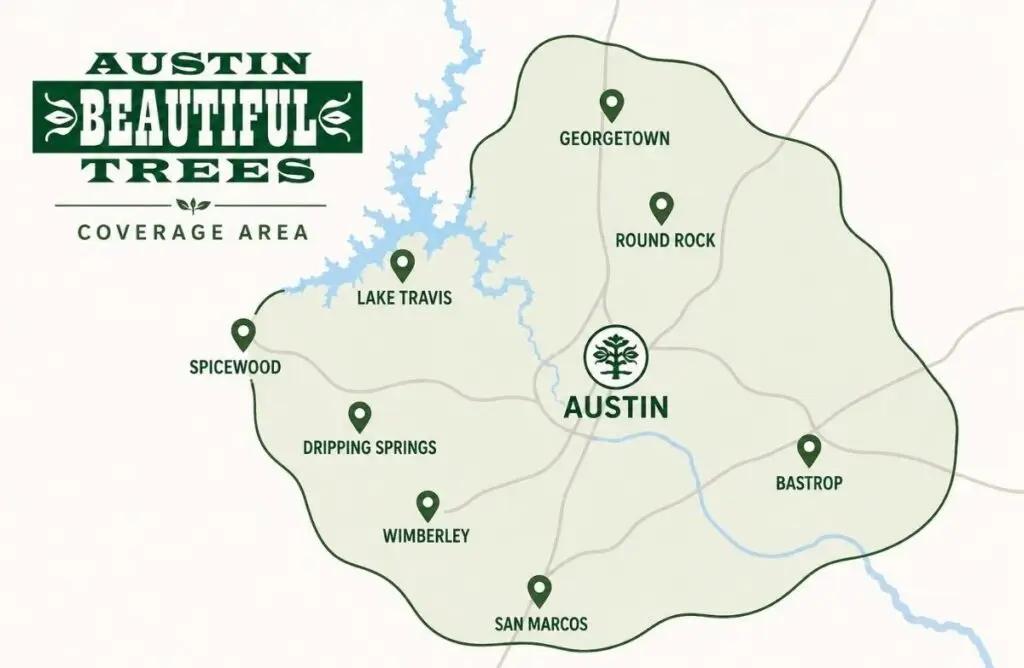
Yes. We serve Austin and the surrounding Hill Country and Central Texas area, including Dripping Springs, Wimberley, Bastrop, San Marcos, Round Rock, Georgetown, Lake Travis, and Spicewood.
Service area
We provide real estate tree inspections throughout Austin and the surrounding Central Texas region. If you don’t see your city listed, call us — we may still be able to help.
- Austin
- Dripping Springs
- Wimberley
- Bastrop
- San Marcos
- Round Rock
- Georgetown
- Lake Travis
- Spicewood
Schedule your real estate tree inspection
Don't close on a property with unknown tree risks. Reach out today and we'll fit an inspection into your contract timeline.